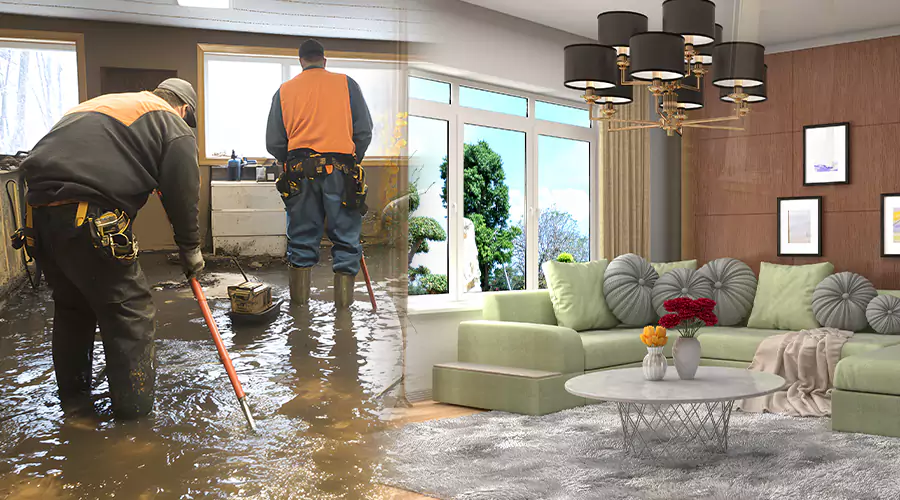



Water can enter your home or business in many ways — from burst pipes and faulty appliances to heavy rain and basement flooding. No matter the cause, dealing with water damage swiftly and correctly is essential to protect your property from mold growth, structural damage, and long‑term deterioration. Professional water damage restoration follows a systematic process designed to remove water, dry affected areas, and restore your space back to a safe condition. In this guide, we’ll walk through the step‑by‑step water damage restoration process so you know what to expect when professionals arrive.
The water damage restoration process begins the moment you contact a professional restoration company. A rapid response team is usually dispatched to your property to assess the situation.
This first step sets the foundation for a tailored restoration plan that efficiently addresses water damage and minimizes additional costs.
Once the site is inspected and the plan is set, professionals move quickly to remove standing water.
Emergency Water Extraction services are often required in areas that are hard to reach may require special tools for complete removal.
Removing water rapidly is crucial because standing water weakens structural materials and creates a breeding ground for mold.
Even after visible water is removed, moisture often remains in porous materials like drywall, wood, and insulation. This hidden moisture must be eliminated to prevent long‑term damage.
This phase can take several days depending on the extent of damage and the materials affected. Proper drying helps protect structural integrity and prevents mold growth.
Water damage often leaves behind contaminants, odors, and health hazards, particularly if the water came from gray or black water sources like sewage or floodwater.
This step ensures the area is both clean and safe for human use, not just dry.
Once the property is dry and clean, the final phase focuses on repairing and restoring your space to its pre‑damage condition.
The goal of this step is to restore appearance and functionality to your home or business — often resembling the “before” condition as closely as possible.
Some restoration processes include extra steps depending on the severity of the damage:
Experts may use moisture mapping to pinpoint hidden wet areas inside walls and floors.
Furniture and personal items may be moved to unaffected areas or taken off‑site for cleaning and storage.
If structural components are too saturated to save, limited demolition may be necessary to stop mold growth and remove unreachable water.
Every stage of the water damage restoration process has a specific purpose:
Skipping or rushing any of these steps can result in hidden damages, costly repairs, and health risks later on.
Water damage restoration isn’t simply drying out a wet room — it’s a comprehensive process that combines science, industry‑standard equipment, and skilled professionals. From the initial inspection and water extraction to final repairs and restoration, each step plays a vital role in ensuring your property is safe, healthy, and fully restored. Understanding this structured approach helps you make informed decisions and ensures that your space returns to normal as quickly and effectively as possible.
Our certified experts are ready 24/7 to assist you with emergency restoration services.
GET A QUOTE